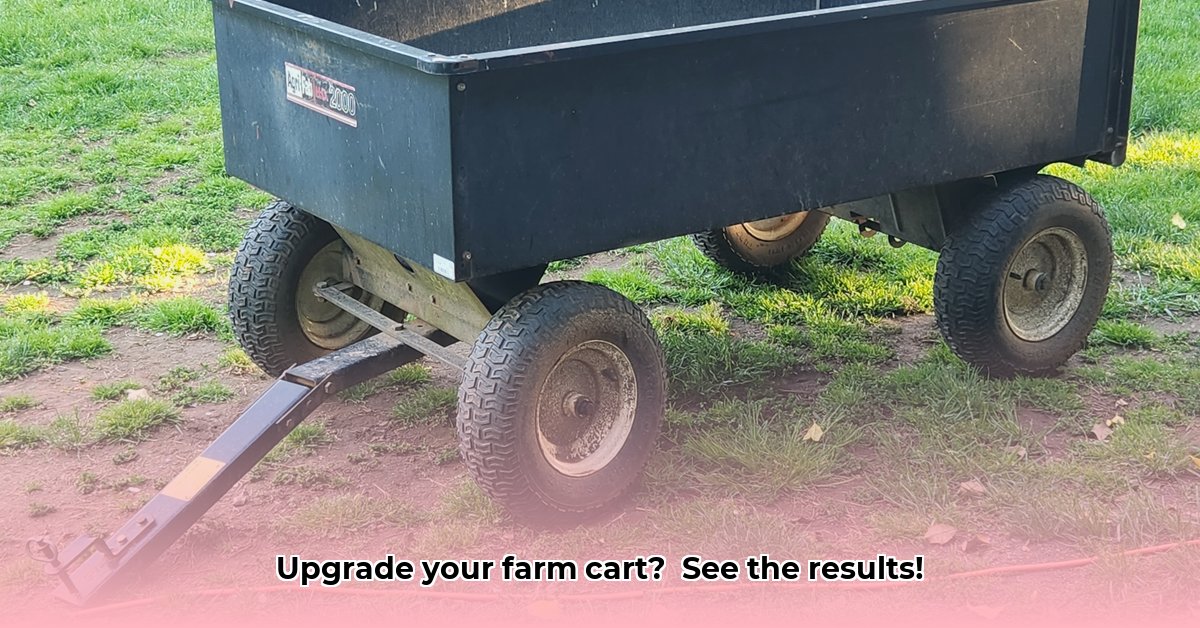
Tractor Supply Cart Wheels: Boosting Your Farm's Efficiency
Ready to streamline your farm work? Upgrading your tractor supply cart wheels is a smart investment – it's about more than just moving things; it's about boosting daily productivity and easing the workload. Choosing the right wheels can save you time, effort, and even physical strain. Let's explore how to select the perfect wheels for your needs. For more information on wheel bearings, check out this helpful resource.
Assessing Your Current Setup: The First Step
Before ordering new wheels, carefully examine your existing ones. What type are they (solid steel, rubber, polymer)? How well do they perform on your land? Do they get bogged down in mud, or struggle with heavier loads? Understanding your current limitations is key to selecting effective replacements. This initial assessment is crucial for a successful upgrade.
Matching Wheels to Your Terrain: Smooth or Rough?
Your farm's terrain significantly impacts wheel selection. Uneven fields, rocky patches, or consistently soft soil require different solutions:
Rough Terrain: Larger, sturdy wheels are essential for absorbing bumps and maintaining smooth movement. They’ll provide stability and prevent damage to your cart and its contents.
Smooth Terrain: Smaller wheels might suffice if your farm is relatively flat and even, offering better maneuverability without sacrificing performance.
Wheel Materials: A Comparison of Strengths and Weaknesses
Different wheel materials each offer unique advantages and disadvantages:
Steel Wheels: These are incredibly durable and handle heavy loads exceptionally well. Their longevity is a significant plus. However, they can be heavy, demanding more effort to maneuver, and compacting soft soil.
Rubber Wheels: Rubber wheels provide a smoother ride, absorbing shocks and vibrations. They're generally lighter than steel, enhancing maneuverability. However, they wear down over time, especially with harsh weather exposure or heavy use and might not be suitable for very heavy loads.
Polymer Wheels: Polymer wheels (often made from recycled materials) offer a balance of durability and sustainability. They provide good shock absorption and load capacity, while being environmentally friendlier.
| Wheel Material | Advantages | Disadvantages | Best Suited For... |
|---|---|---|---|
| Steel | Extremely durable, high load capacity, long lifespan | Heavy, can compact soil, rough ride | Heavy loads, firm ground |
| Rubber | Smooth ride, shock absorption, lighter weight | Less durable, wear prone, unsuitable for very heavy loads | Uneven terrain, moderate loads |
| Polymer | Durable, environmentally friendly, good balance | Potentially higher initial cost | Variety of terrains and loads |
Upgrading Your Wheels: A Practical, Step-by-Step Guide
Follow these steps for a seamless wheel upgrade:
Measure Existing Wheels: Accurately measure the diameter and width of your current wheels to ensure a perfect fit for replacements. This is a critical step in preventing compatibility problems.
Determine Weight Capacity: Consider the heaviest load your cart usually carries. Choose wheels with a weight rating significantly exceeding this to ensure safety. Overestimating is better than underestimating here.
Select Your Wheels: Based on terrain, load capacity, and material considerations, choose your new wheels. Farm supply stores (like Tractor Supply) offer various options.
Precise Installation: Carefully follow the manufacturer's instructions during installation. A secure fit is paramount for safe operation.
Thorough Testing: Before heavy use, test the cart on different parts of your farm to identify any potential issues early on.
Long-Term Considerations: Sustainability and Cost
Beyond immediate functionality, consider the long-term consequences:
Environmental Impact: Opting for recycled materials or sustainable manufacturing practices reduces your farm's environmental footprint.
Cost-Effectiveness: Durable, well-maintained wheels often mean lower replacement costs over time, maximizing your return on investment.
Upgrading your tractor supply cart wheels is a smart investment in efficiency and sustainability. By making informed choices, you’ll improve your farm's productivity and minimize your environmental impact.